
Plan Your Visit to the Basilica Cistern
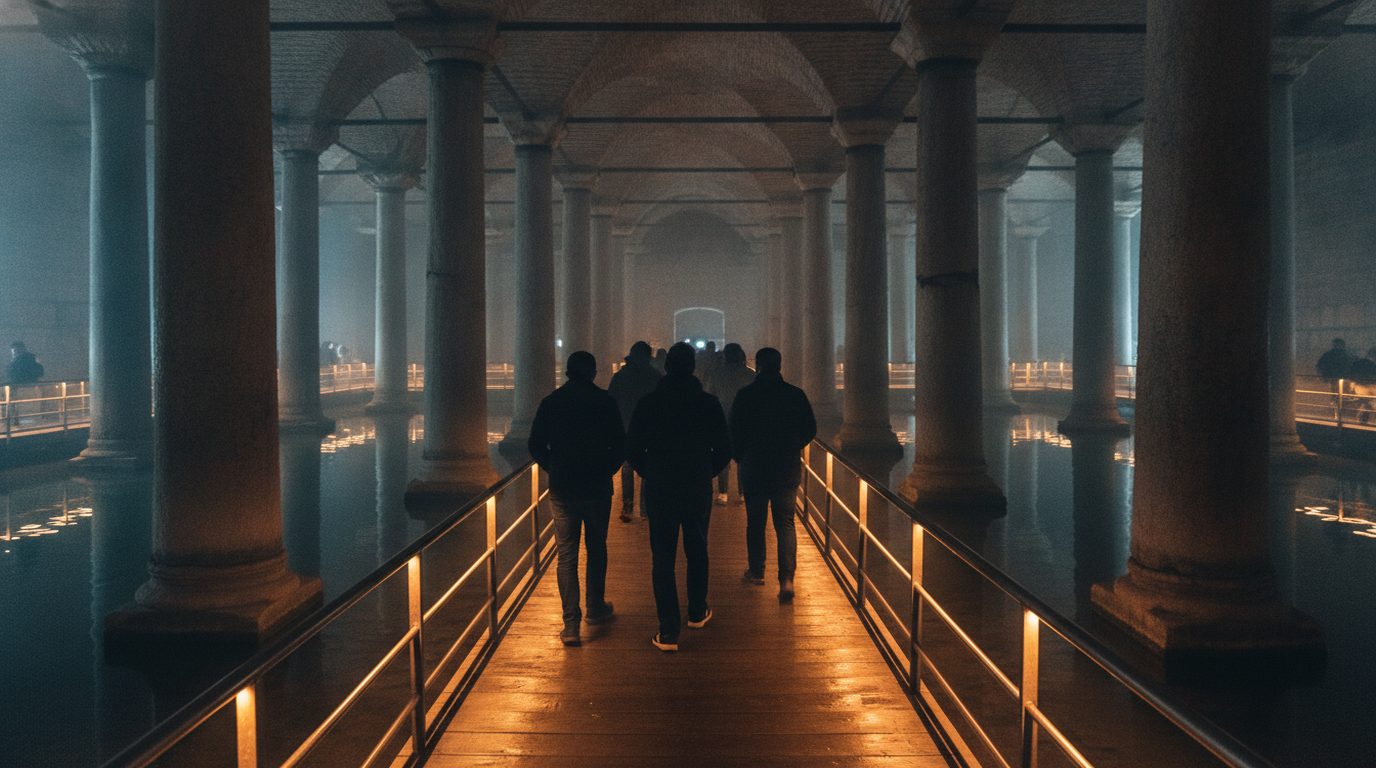
A Basilica Cistern visit is one of the easiest in Istanbul to plan: 30–45 minutes underground, no dress code, open every day, and located dead-centre in Sultanahmet, opposite Hagia Sophia. The only things that genuinely change the experience are your timing and the queue. This page gathers everything worth deciding in advance — when to go, what to wear, what the rules are, and how to slot the cistern into a Sultanahmet day — so that the visit itself can be pure atmosphere.
How long to allow
The route is a single raised-walkway loop with no rooms to choose between and no way to get lost. Three realistic paces:
- 20 minutes — brisk: through the column forest, photo at the Medusa heads, out.
- 30–45 minutes — right for most people: time to let a tour-group wave pass and to stand still in the quiet stretches.
- An hour — photographers and lingerers, mostly in the quieter windows when you can hold a railing spot without pressure.
Add the queue: near zero at 09:00, potentially 30–60 minutes at a summer midday. There is no re-entry, and no toilets or café underground — handle both above ground first.
When to go
Covered in depth on the opening hours page, but the short version:
- Best: 09:00 sharp, any day. The cistern is open every day of the week, Mondays included.
- Good: after 17:00, as the day-trippers thin out, or the evening programme (roughly 19:30–22:00) for a quieter, more theatrical cistern — weighed properly in our night visits article.
- Avoid if you can: 10:30–16:00 in high season, when cruise and tour waves hit Sultanahmet.
Season matters less than at open-air sights — the cistern is the same temperature and the same midnight-dark in January and July. That makes it Sultanahmet’s best rainy-day and heatwave refuge, which is also when everyone else remembers it exists.
What to wear and bring
There is no dress code — this is a secular monument, so the headscarf and shoulder rules of Istanbul’s mosques do not apply here. Dress for a cellar instead:
- A light layer. The cistern holds a cool, humid climate year-round; after a sweaty August square it feels wonderful for five minutes, then chilly.
- Shoes with grip. The walkways are solid and railed but perpetually damp; dripping vaults are part of the experience.
- A camera that handles low light — or just your phone with the flash off. Tripods need permission; the light is genuinely dim (advice in the photo guide).
- Not much else. No big luggage; travel light and the visit is friction-free.
Entry rules and passes — the honest version
Entry is ticketed for every visitor, with no free days; the cistern is run by the Istanbul Metropolitan Municipality’s heritage company, not the national museums directorate. That distinction has one practical consequence people discover too late: Museum Pass Istanbul does not cover the Basilica Cistern, and city passes handle it inconsistently — some bundle a guided visit, some exclude it. If a pass is central to your budget, check its current list before counting the cistern in it. Since you will need separate entry regardless, arranging it in advance is the one move that reliably beats the ticket-office queue; current rates and options live on our partner’s site.
Children’s and student discounts exist at the venue for some categories (Turkish citizens and young children in particular); families should simply expect the walkways to be stroller-unfriendly — 52 entrance steps, no visitor elevator — and plan to carry small children.
Accessibility
The honest picture: the cistern is not step-free. Entry means 52 stairs down and a similar climb out, and there is no visitor lift. Once below, the walkways are flat, railed and generously wide by old-city standards. Visitors with limited mobility who can manage one long staircase at their own pace generally do fine; wheelchair access is effectively not available. The how to get there page covers street-level approach details.
Building it into a Sultanahmet day
The cistern’s location makes it the perfect connective tissue between the old city’s heavyweights — two minutes from Hagia Sophia, five from the Blue Mosque, ten from Topkapı Palace. The classic sequence: Hagia Sophia at opening → cistern before the midday wave → lunch → Blue Mosque or Topkapı after. We’ve written that day up properly, with timings, in Hagia Sophia and the Basilica Cistern in one day. If you are deciding whether the cistern earns its slot at all, our is it worth it? review gives you the unvarnished answer (spoiler: yes, with caveats about timing).
The one-paragraph plan
Go at 09:00. Wear a layer and grippy shoes, leave the tripod, expect 45 minutes door to door. Walk the loop slowly, let one group pass you at the Medusa corner, find the Hen’s Eye column on the way back, and watch the water for carp. Then climb back into the daylight 150 metres from Hagia Sophia with your whole day intact — having sorted entry in advance so the queue was somebody else’s problem.