
Hagia Sophia and the Basilica Cistern in One Day
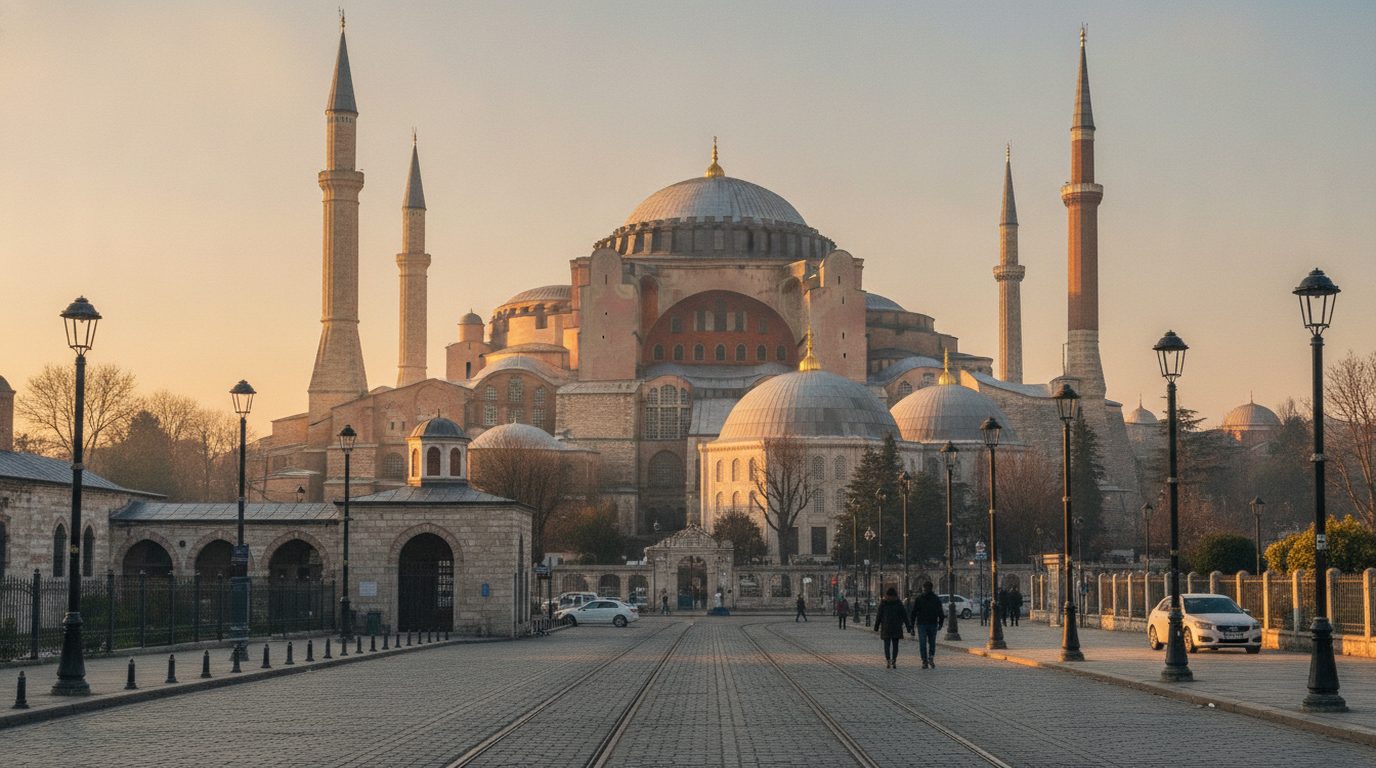
Hagia Sophia and the Basilica Cistern are 150 metres apart — a two-minute walk across a tram street — and they were built by the same emperor in the same decade, which makes them the most natural pairing in Istanbul. One soars, one sinks: the dome that defined world architecture above, and the sunken palace of 336 columns below. Seeing both in one day is not just possible; done in the right order, it is the single best morning the old city offers. Here is the itinerary, timed and tested against the queues.
Why these two belong together
The pairing is more than geographic convenience. Both are works of Justinian I: Hagia Sophia consecrated in 537 AD, the cistern completed in 532 to secure the water supply of the palace quarter as the city rebuilt after the Nika riots. They are two halves of one imperial building programme — the theology above the street and the engineering below it. Visiting them back-to-back, the connection is physical: the same brick, the same recycled marble columns, the same overwhelming Byzantine scale, experienced first in light and then in darkness (the cistern’s full history is here).
They also solve each other’s logistics. Both generate serious queues, but their queue-curves differ — Hagia Sophia’s builds from opening and stays; the cistern’s peaks late morning through mid-afternoon. That asymmetry is the key to the plan.
The itinerary
08:45 — Sultanahmet Square. Arrive by tram T1 (Sultanahmet stop) before the day heats up (full transport details). Coffee near the square if you need it, then position yourself at Hagia Sophia’s visitor entrance before opening.
09:00–10:30 — Hagia Sophia. Go in with the first wave. Foreign visitors take the upper-gallery route; 60–90 minutes covers it well. Being early matters twice here: the thinnest crowds, and morning light through the dome’s ring of windows.
10:30–10:35 — the two-minute walk. Exit toward the square, cross the tram street at the top of Yerebatan Caddesi, and you are at the cistern’s entrance pavilion. You will pass the Milion stone — the Byzantine zero-milestone of the world — without meaning to; give it thirty seconds.
10:35–11:30 — the Basilica Cistern. Descend the 52 steps into the cool dark: the column forest, the Hen’s Eye column, the Medusa heads at the far corner. You are arriving just as the cistern’s queue starts building — this is the timing pinch-point of the whole day, and the one place where having entry arranged in advance pays for itself in saved queue time. Allow 45 minutes below.
11:30–12:30 — lunch. The streets between Sultanahmet and the Grand Bazaar hide better and cheaper lunches than the square itself; walk five minutes away from the monuments before sitting down.
12:30 onward — the flexible afternoon. Three good options, all within ten minutes’ walk: the Blue Mosque (free, closed to visitors at prayer times, dress modestly), Topkapı Palace (allow a half day if you enter), or Gülhane Park and the walk down to Eminönü for the Spice Bazaar and the Galata Bridge. Order the afternoon by energy, not by guidebook duty.
Evening option. If you skipped the cistern’s midday window — or want to see it twice — the night session (roughly 19:30–22:00) pairs beautifully with floodlit Hagia Sophia across the square.
The order matters: cistern second
Every version of this day works better with Hagia Sophia first. Three reasons:
- Queue asymmetry. At 09:00, Hagia Sophia’s line is at its daily minimum while the cistern’s is near zero all morning — but by 11:00 the cistern queue is growing while Hagia Sophia’s has already peaked. First-mover advantage goes to the building whose queue never recovers.
- Contrast. Light before dark is the better dramaturgy — stepping from the blazing square into the amber underworld is the day’s best scene change.
- Climate. By late morning, Sultanahmet in summer is hot; the cistern is the coolest room in the old city, arriving exactly when you want it.
Practical footnotes
- Separate entries. The two monuments have different operators, and no shared pass covers both — the cistern is municipal, and notably outside Museum Pass Istanbul. Combination options covering both exist on our partner’s site — see combined entry for the pair.
- Dress for both. Hagia Sophia is a working mosque: shoulders and knees covered, headscarf for women. The cistern has no dress code — the same modest outfit plus a light layer handles the whole day.
- Check the hours. Hagia Sophia pauses tourist entry at prayer times (longest on Friday middays); the cistern runs every day, roughly 09:00–18:30 (current rhythm here). On Fridays, simply run this itinerary on the cistern-first variant: cistern at 09:00, Hagia Sophia after 15:00.
- Total budget: half a day for the pair, comfortably; a full day with Topkapı added.
One emperor, one decade, two masterpieces, 150 metres apart. Do them in one morning, in the right order, and you understand Byzantium better than most museums can manage — sort the cistern leg in advance and the whole day runs on your clock, not the queue’s.